Persistent context for humans and AI
The Vault
The Vault is a source-grounded knowledge system that connects product intent, engineering decisions, implementation evidence, and the AI sessions used to do the work.
- Storage
- Markdown and Git
- Engine
- Python CLI and typed models
- Interfaces
- AI sessions, terminal, and automation
Organizations remember in fragments.
Product intent lives in documents and conversations. Engineering intent lives in code, pull requests, architecture decisions, and the memories of the people who made them. AI agents usually see only the task and the repository in front of them.
The Vault preserves the links between those fragments. It gives people a way to follow a decision into what shipped, and gives an AI agent a focused starting theory before it changes code.
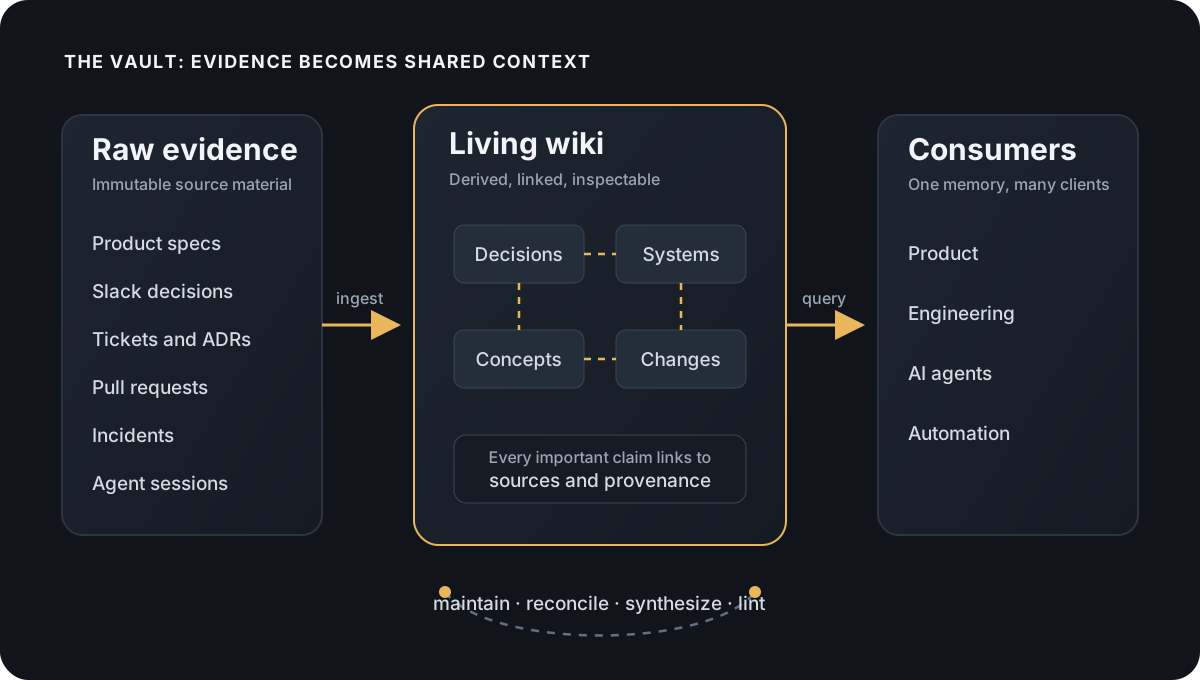
Operating model
A compiler for organizational knowledge.
The system separates mechanical collection, model-assisted synthesis, everyday use, and health checks. Each stage has a different risk profile.
- 01
Ingest
Collect pull requests, architecture decisions, product documents, meeting notes, issue records, and meaningful AI sessions without rewriting the originals.
- 02
Compile
Extract typed facts, update focused wiki pages, connect related evidence, surface contradictions, and rebuild lightweight indexes.
- 03
Use
Load the smallest relevant map into a working session, follow citations when needed, and verify important claims against current code.
- 04
Maintain
Audit broken links, stale claims, orphaned pages, missed runs, and gaps between the evidence layer and the current synthesis.
Implementation
Plain files, deliberate machinery.
The implementation is intentionally inspectable. The knowledge remains useful without a proprietary database or a running application.
vault/
├── SCHEMA.md
├── Global/
│   ├── Raw/
│   ├── Standards/
│   ├── Patterns/
│   ├── _hot.md
│   └── _index.md
├── Repos/
│   └── payments-api/
│       ├── Raw/
│       ├── Decisions/
│       ├── Stories/
│       ├── _hot.md
│       └── _index.md
└── Inbox/
Scoped context
Small hot files and indexes load first. Deeper pages and raw sources are followed only when the task needs them.
Portable configuration
Repositories, topics, source paths, and exclusions are configuration. Machine-specific paths stay outside the shared knowledge.
Operational CLI
Ingest, compile, lint, search, doctor, and scheduling commands make the memory loop testable and repeatable.
Self-healing cadence
Scheduled work can catch up after missed runs. A diagnostic command verifies credentials, hooks, paths, and schedules.
In practice
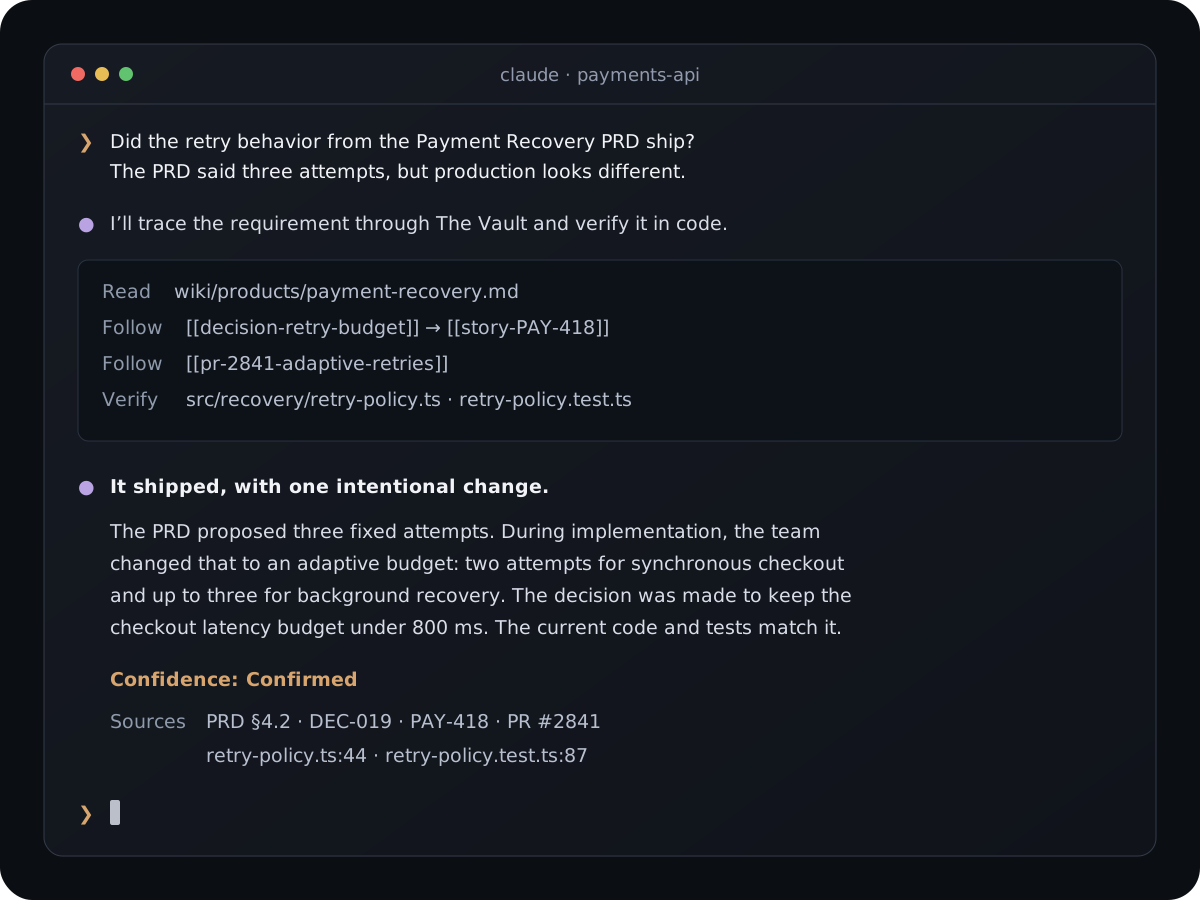
Ask about intent. Verify the implementation.
This fictional example shows the shape of a useful answer. The agent follows product intent through the decision that changed it, then checks the current code and tests.
Trust boundaries
AI-assisted does not mean AI-authoritative.
A useful knowledge system needs stronger guarantees than “the model usually gets it right.”
Raw evidence is immutable
Automation appends source artifacts but does not quietly rewrite them. The wiki can be rebuilt from the evidence layer.
The model does not hold the pen
Untrusted text is reduced to validated, typed output. Deterministic code writes trusted files and provenance.
Authority depends on the page
Reference material can accept safe additions. Opinionated standards and patterns require human promotion.
Failure stays visible
Cadences fail loudly, caches are validated before replacement, concurrent runs are locked, and every operation leaves an audit entry.
The Vault does not replace judgment.
- It is not a claim that documentation becomes truth.
- It is not a reason to feed every document into every prompt.
- It is not a black box that hides where an answer came from.
- It is not permission for a model to rewrite organizational policy.
It is a maintained map with receipts. People still own decisions, and the running system still gets the final vote.
Try the pattern
Start with one domain and one real workflow.
The public scaffold interviews you about your domain, creates a generic Raw and Wiki structure, writes the operating contract, seeds the first pages, and installs ingest, query, and lint instructions for your agent.